ServicesAC Installation
Air Conditioner Installation in Latah
Central air costs real money, so you should understand exactly what you're getting. We size the unit to your house, explain each equipment option in everyday language and put the quote in writing before any work begins.
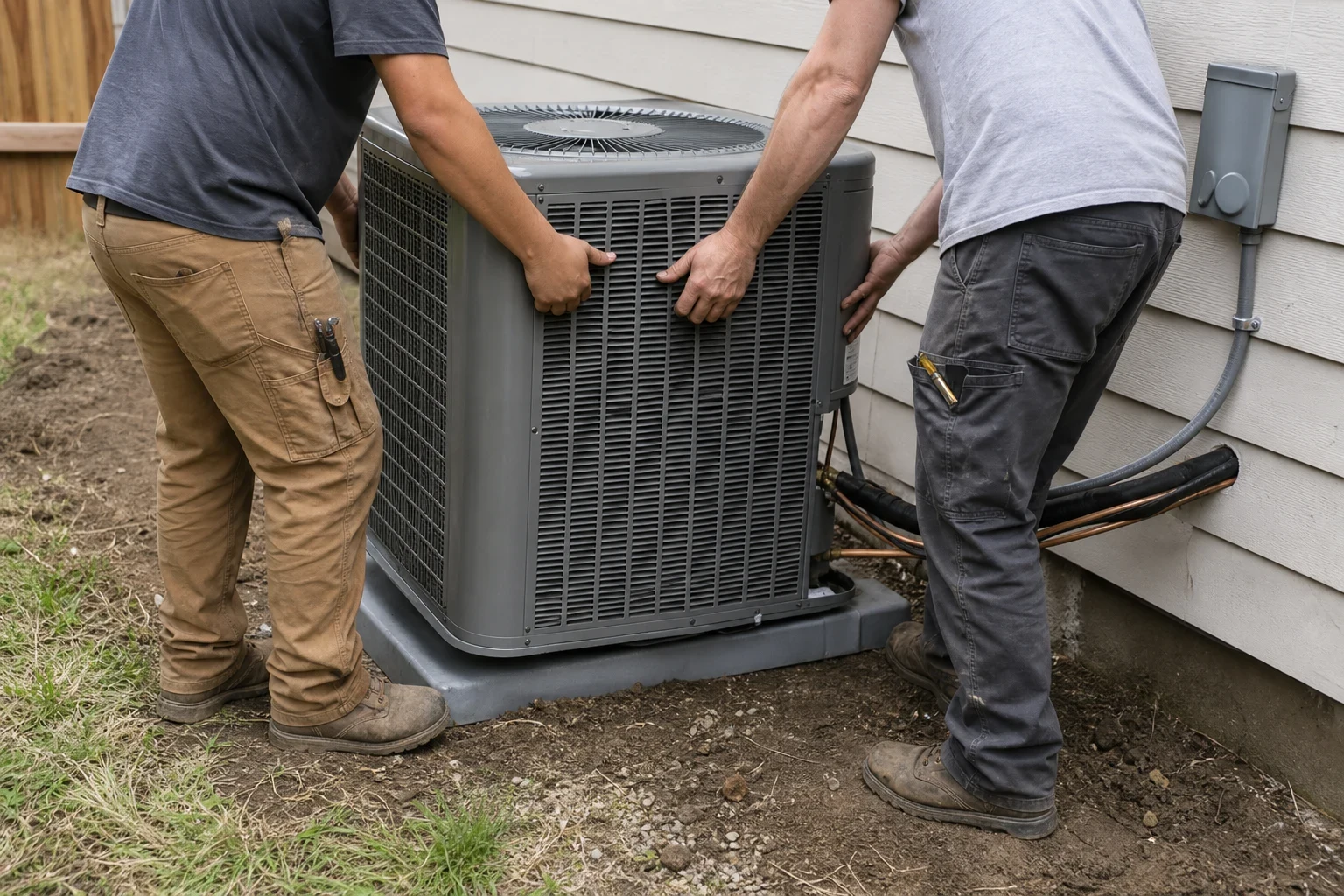
Know your new system before we install it
Few people shop for central air more than once or twice, and the terms can sound like jargon. Single-stage versus variable speed, copper coil versus all-aluminum, a higher SEER2 rating that costs more now and less each month. We explain what each option means for your house and leave the decision to you.
A new install is worth it when you're getting cooling for the first time, when an aging unit keeps needing repairs, or when it relies on R-22 refrigerant, which is no longer made. If fixing it is the better bet, we'll tell you and send you to our AC repair service.
Our hot, dry summer days and cool evenings suit a properly matched system and wear out an oversized one. Correct sizing counts for more than the name on the box.
What your AC installation includes
- A load calculation, not a guess
- We measure your home and account for insulation, windows, sun exposure and ceiling height. That tells us the capacity you need, so the system runs long enough to pull humidity out and doesn't short-cycle.
- Equipment options side by side
- You'll see a few matched setups at different efficiency levels. We explain the trade-offs between single-stage, two-stage and variable-speed compressors, and between all-aluminum and copper-tube coils.
- New refrigerant lines where needed
- Older copper line sets can carry leftover oil and contaminants that shorten the life of a new compressor. We check yours and replace or flush it so the new system starts clean.
- Pad, wiring and permit
- The outdoor unit sits level on a composite pad that won't crack or settle like old concrete can. We handle the electrical disconnect and pull the permit the job requires.
- Startup and a walkthrough
- We charge the system to the manufacturer's spec, test temperatures and airflow, and show you how the thermostat and filter work before we leave.
When a new air conditioner makes sense
It uses R-22 refrigerant
Many units made before roughly 2010 run on R-22, which is no longer produced. A leak means paying for costly reclaimed refrigerant, so replacing the unit tends to cost less in the long run.
The repair bills keep coming
After paying for a compressor, fan motor and coil leak within a few summers, the next repair dollar usually goes further toward a new unit.
Rooms stay warm
A worn or undersized unit falls behind on the hottest afternoons. A telltale sign is upstairs bedrooms staying hot well after the thermostat reads its setting.
Cooling bills rise every summer
A unit 15 or more years old can draw much more electricity than a current model doing the same cooling.
Your home has no central air yet
With a forced-air furnace in place, adding a matched AC is usually straightforward. Homes without one may be better served by a heat pump or ductless mini-splits.
From first visit to first cool evening
- 1
Measuring and quoting
Before anything is ordered, we check the equipment you have now, measure rooms and windows for the load calculation and go over the setups that fit. Your written quote lists the equipment and the labor as separate lines.
- 2
Protecting your home
On install day we lay drop cloths along the path to the furnace and keep the work area tidy. Most replacements are finished in a single day.
- 3
Removal and setup
We recover the old refrigerant properly, remove the old unit, set the new pad and condenser, and install the indoor coil on your furnace.
- 4
Testing and cleanup
We pull a deep vacuum on the lines, charge the system, check every reading and haul away the old equipment. Then we walk you through how everything works.
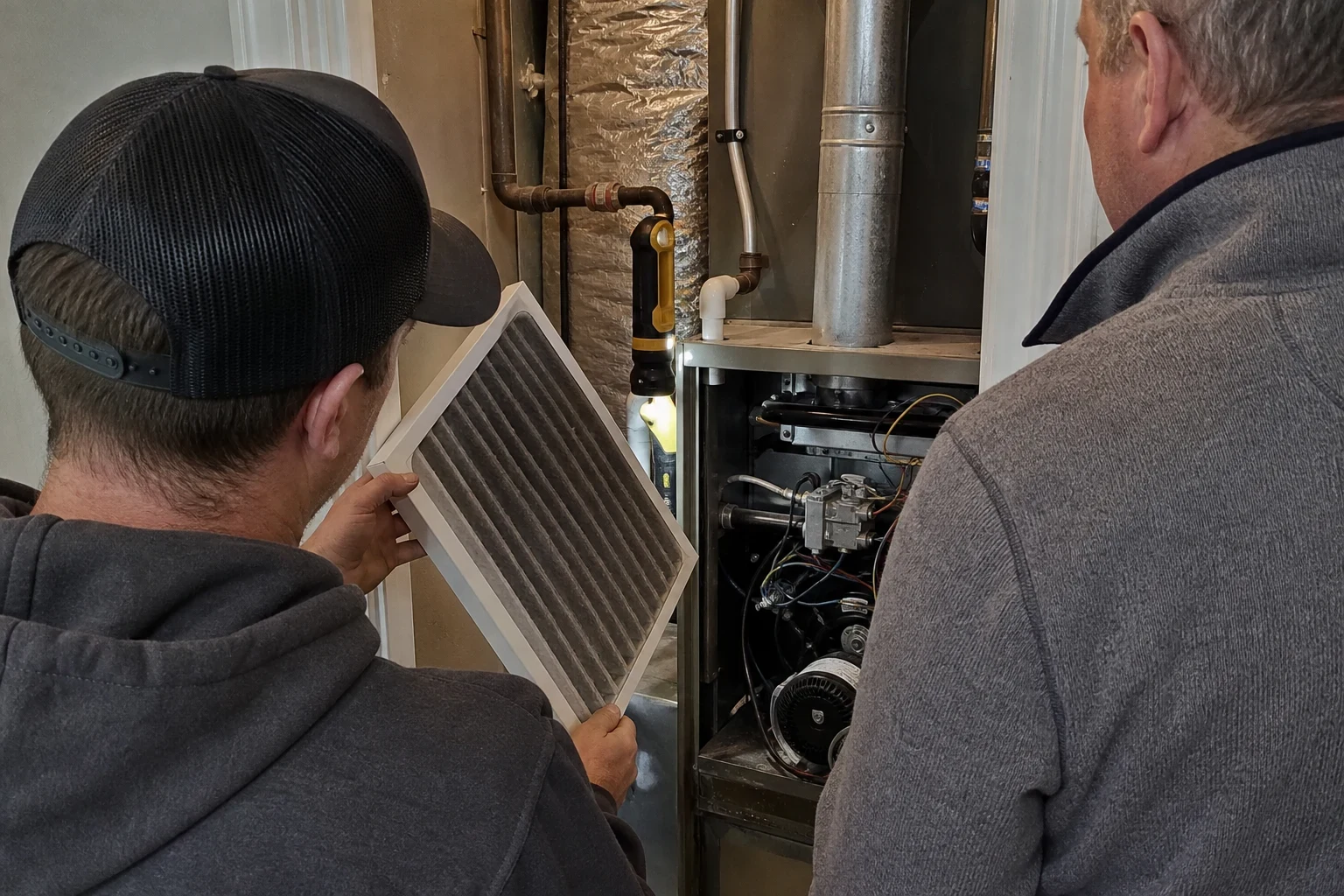
What sets the price of your installation
We don't put a number on a new system until we've measured your house, because two homes of similar size can need very different equipment. The factors below push the price one way or the other. Each one shows up as its own line on your written quote, so you can see exactly where the money goes.
- System size
- A larger home or one with lots of west-facing glass needs more capacity, which means a bigger condenser and coil.
- Efficiency and compressor type
- Higher SEER2 ratings and variable-speed compressors cost more upfront. They run quieter, hold steadier temperatures and use less electricity each month.
- Coil and refrigerant choices
- Newer systems use refrigerants like R-454B, and coil materials vary by model. We'll explain which matches your furnace and how it affects price and durability.
- Line set and electrical work
- Reusing a clean, properly sized line set saves money. A longer run, a new disconnect or an electrical panel update adds to the job.
- Furnace compatibility
- If your furnace is near the end of its life, pairing the AC with a furnace installation at the same time can save a second visit.
Questions about a new AC
Something not covered here? (509) 213-1614
Do I pay anything for the estimate?
No. Installation and replacement estimates are free. We visit, measure the house and hand you a written quote before any work begins, and you're under no obligation.
Who does the actual install?
We do. We're licensed and bonded in Washington and Trane Certified, and the company that prices the job is the one that installs it, so whoever explains your options knows how the work will go.
Will my furnace need replacing as well?
Not necessarily. The new indoor coil must match the furnace blower, which we check at the estimate. If the furnace is aging or a poor fit, we'll lay out both paths and you pick.
Would a heat pump be a better choice?
It's worth a look. A heat pump cools the same as an AC and heats on milder days too, and we help you claim Avista rebates and federal tax credits on heat pumps. See our heat pumps page for more.
What lifespan should I expect?
Many systems last 15 years or longer with a tune-up each year. Our maintenance plans include tune-ups, repair discounts and priority scheduling to help look after the new equipment.
Let's find the right air conditioner for your home
We'll come out, size the system and lay out your options in plain terms. You'll have a written quote in hand before anything is installed.