ServicesFurnace Installation
Furnace Installation in Latah
A new furnace is a big decision, and you deserve to understand it. We walk you through fuel types, efficiency levels and burner styles in plain terms, size the unit to your home, and hand you a written quote before any work begins.
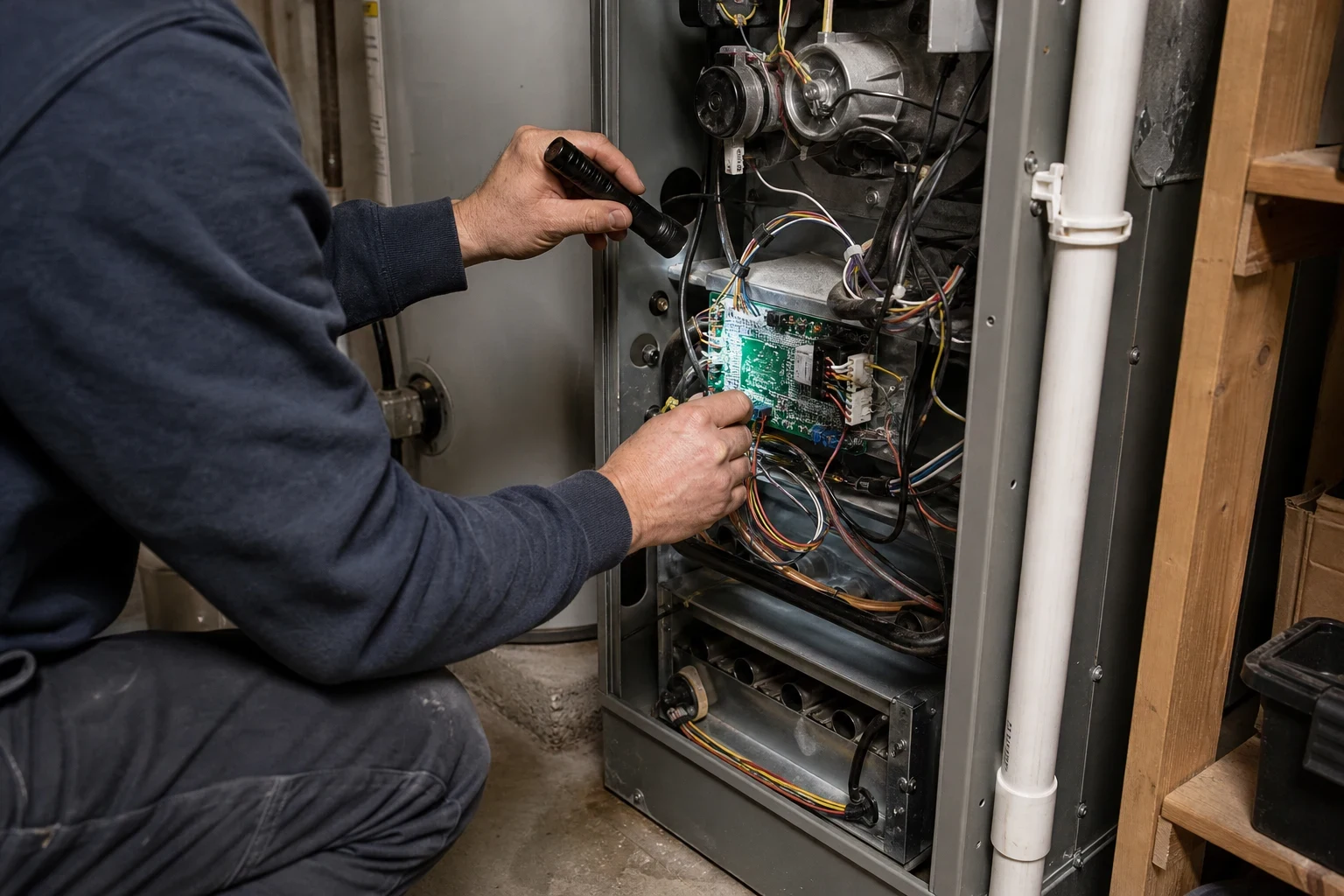
Choosing a furnace you will be glad you picked
Most furnaces look alike from the outside. The differences that matter are inside: the fuel it burns, how much of that fuel turns into heat, and whether the burner runs at one setting or adjusts to the weather. Those choices decide how comfortable your home feels and what your heating bills look like for years.
We are licensed and bonded in Washington and Trane Certified. That means the equipment goes in the way the manufacturer intends, with the gas line, venting and electrical done to code. Before you commit, we lay out two or three options side by side so you can weigh comfort against budget. Estimates on installations are free.
If your furnace has quit in the middle of a cold snap, we offer 24/7 emergency HVAC repair, so you are not forced into a rushed replacement just to get heat back.
What a furnace installation includes
A load calculation, not a guess
We look at your square footage, insulation, windows and how your home holds heat. An oversized furnace short-cycles and wears out early, while an undersized one runs nonstop on the coldest nights.
Fuel options explained
Natural gas is usually the cheapest to run where it is available. Propane works well for rural homes without a gas line, and electric furnaces cost less to install but more to operate. We tell you which makes sense for your setup.
Efficiency trade-offs
An 80 percent furnace vents through a metal flue and costs less up front. A 95 percent condensing furnace squeezes out more heat, vents through PVC pipe and needs a condensate drain. We show you how long the savings take to pay back.
Single-stage, two-stage or modulating
A single-stage burner is either on or off. Two-stage and modulating burners run lower and longer on mild days, which means steadier temperatures, quieter operation and fewer drafts.
Venting, gas and electrical
We connect the gas or propane supply, pressure-test it, install proper venting and wire the thermostat. Your old unit is removed and hauled away.
Startup and walkthrough
We fire up the new furnace, check combustion and temperature rise, and show you how to change the filter and read the thermostat.
Signs it is time for a new furnace
Repairs keep stacking up
If you have called for furnace repair more than once in the last couple of winters, a replacement may cost less over time. We will give you an honest repair-or-replace answer.
Your furnace is 15 to 20 years old
Older units were built to lower efficiency standards, and parts get harder to find. Heat exchangers also weaken with age.
Some rooms never warm up
Cold bedrooms and a hot hallway can point to a furnace that was sized wrong from the start or a blower that no longer moves enough air.
Bills climb while use stays the same
A furnace losing efficiency burns more fuel to deliver the same heat. A rising bill in an ordinary winter is often the first clue.
Yellow flames, soot or odd smells
A gas burner should burn blue. Yellow flames or soot around the unit can signal incomplete combustion, which needs attention right away.
How installation day goes
- 1
Free in-home estimate
We visit, measure, look at your current system and talk about what bothers you most, whether that is noise, cold rooms or bills. You get a written quote with each option listed.
- 2
Permit and scheduling
We pull the mechanical permit and set a date that works for you. Most replacements take one day.
- 3
Removal and setup
We lay down floor protection, disconnect and remove the old furnace, then set the new one and connect gas, venting, drain and power.
- 4
Testing and cleanup
We run the furnace through full cycles, check for gas leaks and confirm safe combustion. Then we clean up and walk you through the controls before we leave.
- 5
Inspection
A local inspector signs off on the work. We handle the coordination so you do not have to.
What affects the cost of a new furnace
Every home is different, so we price each job after we have seen it. Your written quote spells out the equipment and the labor, and nothing changes without your approval first.
- Efficiency rating
- A 95 percent condensing furnace costs more than an 80 percent model but uses less fuel each month.
- Burner type
- Two-stage and modulating furnaces cost more than single-stage units in exchange for better comfort and quieter running.
- Fuel and conversions
- Staying with your current fuel keeps costs down. Switching from electric to gas or propane adds gas line and venting work.
- Venting changes
- Moving from a metal flue to PVC venting, or relining an old chimney, adds materials and time.
- Access and location
- A furnace in an open basement is quicker to replace than one in a tight crawlspace or attic.
Furnace installation questions
Something not covered here? (509) 213-1614
Is a high-efficiency furnace worth it here?
Often, yes. Our winters are long and cold, so a 95 percent furnace has plenty of hours to earn back its higher price. If you plan to move in a few years, an 80 percent model can be the smarter buy, and we will tell you so.
Should I consider a heat pump instead?
It is worth a look. Many homeowners pair a heat pump with a gas or propane furnace that takes over on the coldest days. We can help you claim Avista rebates and federal tax credits on heat pumps, and our Heat Pumps page explains the options.
Do you install Trane furnaces?
Yes, we install Trane furnaces, and we are happy to talk through other equipment if you have a brand in mind. We will lay out how the models differ in efficiency, burner type and noise so you can compare them honestly.
How long does installation take?
A straight replacement usually takes one day. Fuel conversions or venting changes can add a day, and we will tell you up front.
Will I be without heat for long?
Only during the install itself. We remove the old unit and get the new one running the same day in most cases, and we schedule around cold weather whenever we can.
Ready to compare your furnace options?
We will come out, look at your home and explain each choice in plain language. Your estimate is free and in writing.