ServicesHeat Pumps
Heat Pumps in Latah
A heat pump can heat your home through a cold Inland Northwest winter and cool it in August, all from one outdoor unit. We help you pick the right equipment, install it carefully and keep it running, with a free estimate before anything changes.
One System for Heating and Cooling
A heat pump moves heat instead of burning fuel to make it. In winter it pulls warmth from the outside air and brings it indoors. In summer it runs in reverse and works like an air conditioner. For many homes that means lower heating bills and one less appliance to maintain.
Not every heat pump is built the same, and the differences matter in a place where January nights drop well below freezing. Compressor type, coil material and refrigerant all change how a unit performs and how long it lasts. We walk you through those choices in plain terms so you know what you are paying for.
We are licensed and bonded in Washington and Trane Certified, and we install and repair heat pumps in Latah, Cheney, Spokane Valley and the towns around them.
What Our Heat Pump Work Covers
Load calculation and sizing
We look at your home's square footage, insulation, windows and how it faces the sun. A unit that is too big short-cycles and wears out early. One that is too small runs nonstop on the coldest days.
Equipment options, side by side
Single-stage compressors are simpler and cost less up front. Variable-speed inverter compressors adjust their output, run quieter and hold heat better in deep cold. We show you both and tell you which fits your home and budget.
Coils and refrigerant explained
Copper coils are easier to repair, while aluminum coils resist the corrosion that causes pinhole leaks. Newer systems use lower-impact refrigerants as older R-410A equipment is phased down. We explain what each means for service down the road.
Careful installation
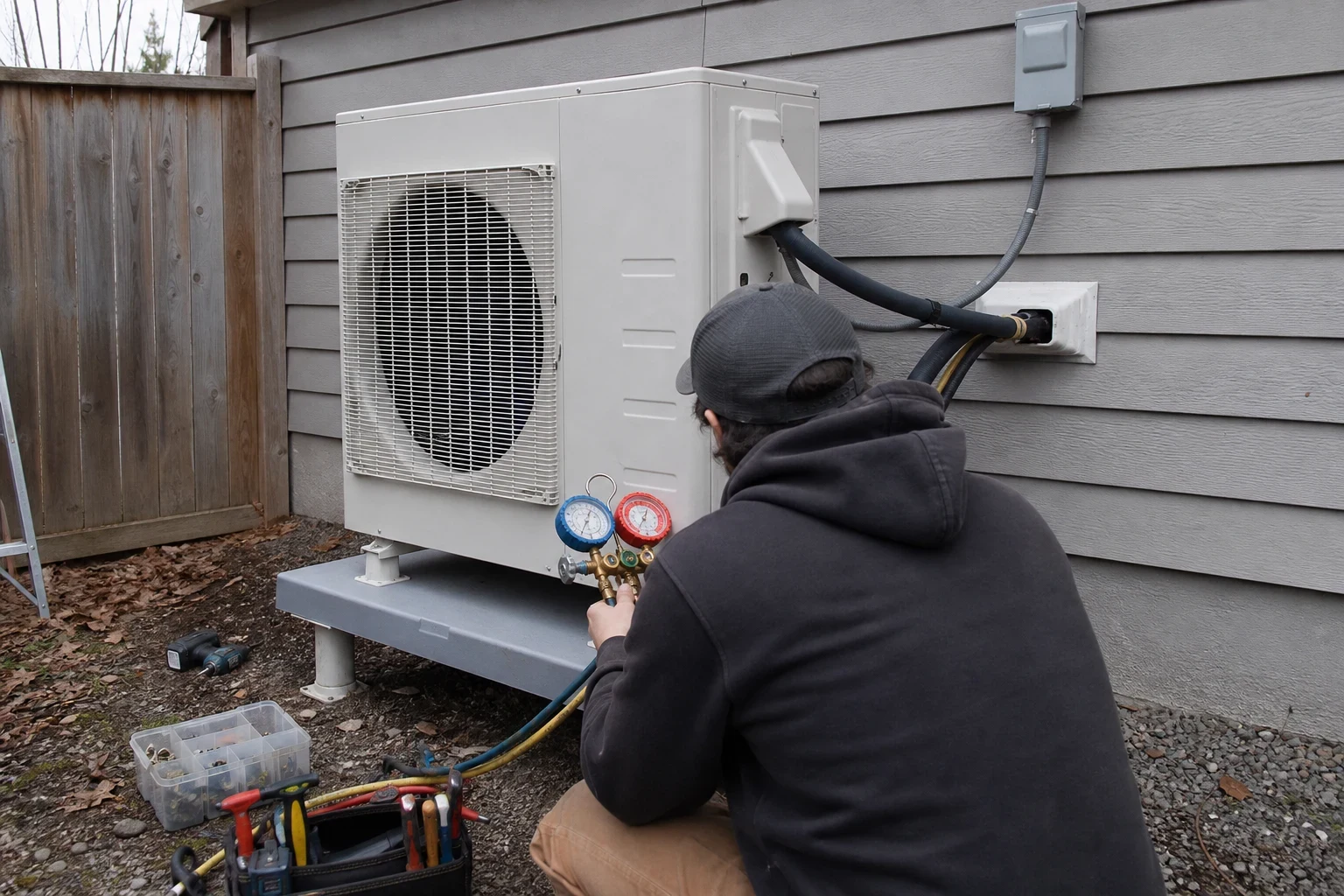
We set the outdoor unit on a raised pad or wall bracket so snow and ice do not bury it, run and pressure-test the copper line set, and pull a deep vacuum before charging. Then we clean up and walk you through the thermostat.
Rebate and tax credit help
Avista rebates and federal tax credits can take a real bite out of the cost of a new heat pump. We point out which models qualify, help you file the claims and hand you the paperwork you need to back them up.
Repair on existing systems
If your current heat pump is struggling, we find the cause, whether a failed reversing valve, a refrigerant leak or a worn capacitor, and give you an honest repair-or-replace answer.
Signs Your Heat Pump Needs Attention
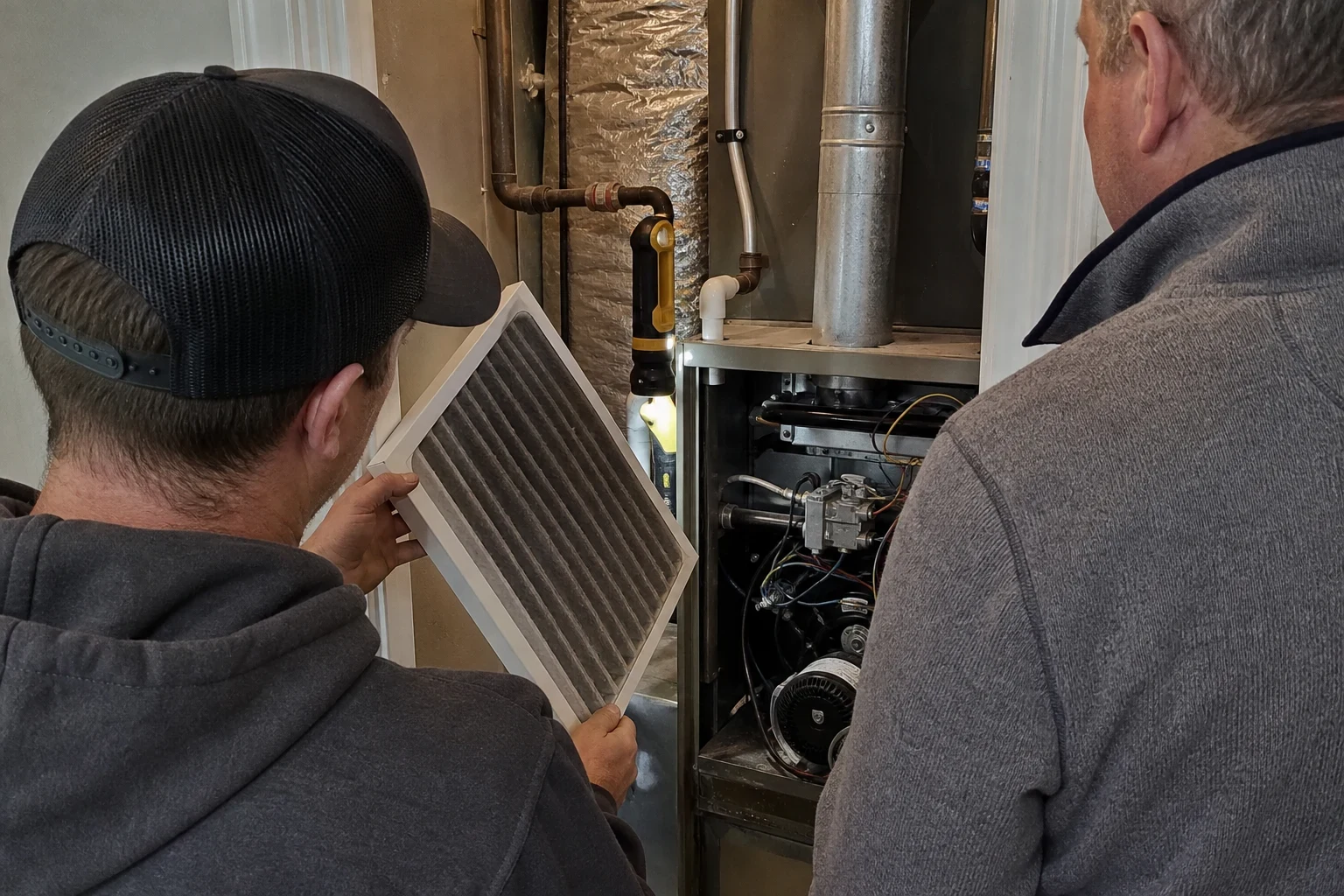
- It blows lukewarm air in winter
- Heat pump air feels cooler than furnace air, but it should still feel warm. Air that feels room temperature often points to low refrigerant or a stuck reversing valve.
- Ice that will not clear
- Some frost in winter is normal, and the defrost cycle should melt it off. A unit encased in ice for hours needs a look before the coil or fan gets damaged.
- Backup heat runs constantly
- If your thermostat shows auxiliary or emergency heat most of the day, your electric bill will climb fast. It usually means the heat pump is undersized or not working properly.
- New grinding or rattling
- A loud compressor start, a buzzing outdoor unit or a rattle from the fan can signal a failing motor or loose parts.
- An older system on its last legs
- Heat pumps work year-round, so they wear faster than a furnace alone. If yours needs frequent repairs, replacing it with a more efficient model may cost less over time.
How a Heat Pump Install Goes
- 1
A free look at your home
There is no charge to estimate an installation or replacement. We check your current equipment, your electrical panel and the spots where an outdoor unit could sit, and we answer your questions about materials and models.
- 2
The plan on paper
Nothing gets started until you have our quote in writing. It lists the equipment, the labor and which rebates the system qualifies for, so you can compare and decide without anyone waiting on your doorstep.
- 3
Install day
We protect your floors, remove the old equipment and set the new indoor and outdoor units. Most swaps on a home with an existing system take a day.
- 4
Testing and walkthrough
We check refrigerant pressures, airflow and the defrost cycle, then show you how the thermostat handles heating, cooling and backup heat. We haul away the old unit and leave the space clean.
What Shapes the Price of a Heat Pump
Two homes on the same street can need very different systems. Your written quote lists every part and labor line so nothing comes as a surprise, and rebates and tax credits can lower what you pay.
- Size and capacity
- Larger homes or homes with less insulation need more heating capacity, which means a bigger unit.
- Compressor type
- Variable-speed and cold-climate models cost more up front but run more efficiently and keep heating at lower outdoor temperatures.
- Dual fuel or all-electric
- Pairing a heat pump with a gas furnace for the coldest days changes the equipment list and the controls.
- Electrical and placement
- Some homes need a panel upgrade or a new circuit. A long line set run or a tricky spot for the outdoor unit adds labor.
Heat Pump Questions We Hear Often
- Will a heat pump keep my home warm in a real cold snap?
- A cold-climate heat pump keeps producing heat well below freezing. On the very coldest nights, a backup heat strip or a gas furnace can take over. We size the system and the backup so you stay comfortable without huge bills.
- Can I keep my furnace and add a heat pump?
- Yes. A dual fuel setup lets the heat pump handle most of the year while the furnace covers deep cold. Many homeowners like it because it uses the cheaper fuel at each temperature. We can explain whether it makes sense for your home.
- What if my home has no ducts?
- A ductless system may be the better fit. Our Ductless Mini-Splits page covers how those work, and we can talk through both options on the phone.
- Do you help with rebates?
- We do. Before you choose a model, we tell you which ones qualify for Avista rebates and federal tax credits, then help you put in the claims once the system is running.
- What if my heat pump quits in the middle of the night?
- Pick up the phone. Our emergency HVAC repair runs around the clock, and we never tack on an after-hours or emergency charge for a late call. Once you say yes to the repair, the diagnostic fee is credited toward it.
Ready to Talk Heat Pumps?
Tell us about your home and your current system, and we will lay out the options in plain terms. The estimate is free and the quote comes in writing.