ServicesDuctless Mini-Splits
Ductless Mini-Splits in Latah, WA
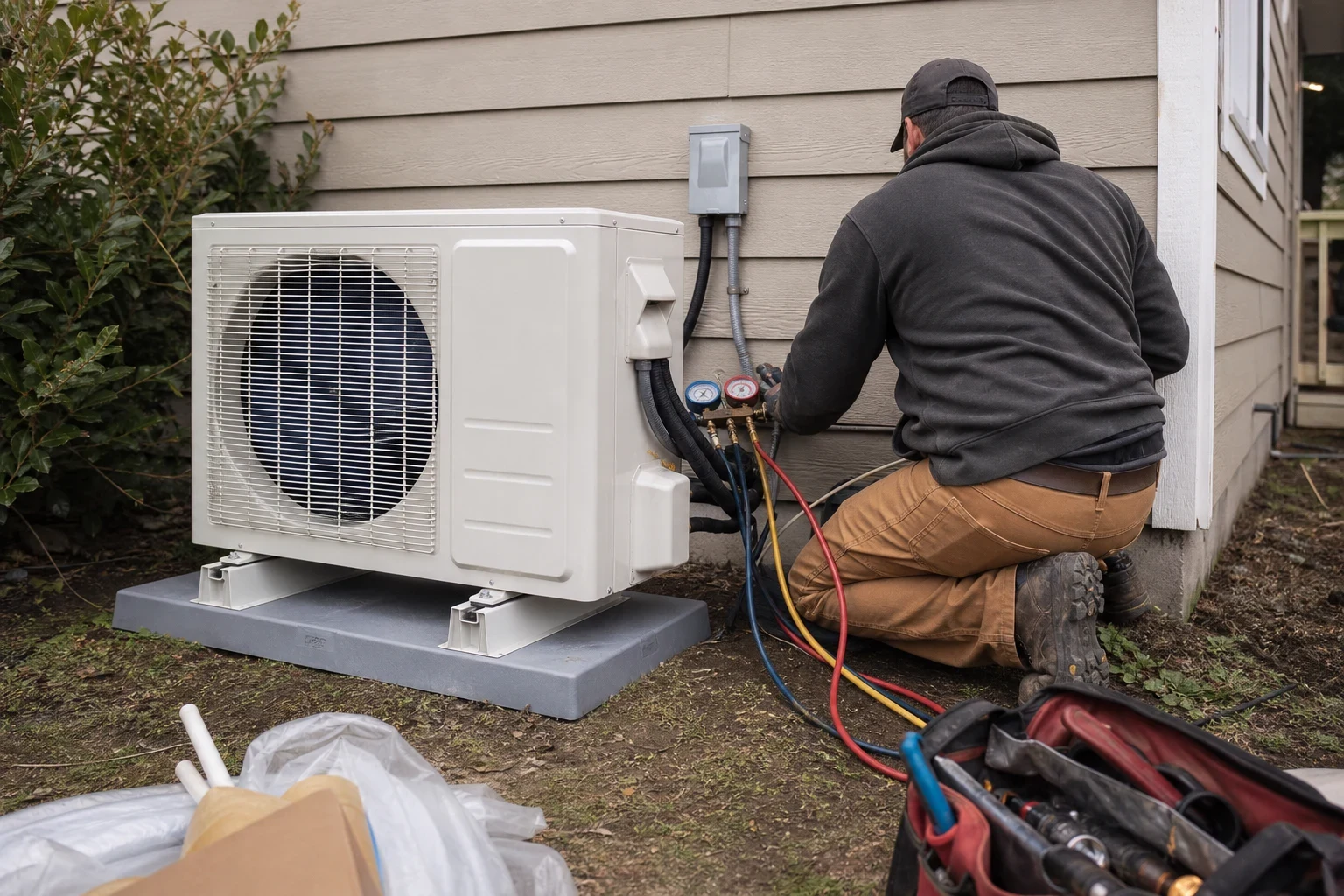
A mini-split heats and cools a room without any ducts, using a small outdoor unit and one or more indoor heads. We walk you through the head styles, line set choices and outdoor mounting options so you know what you are buying and why.
When a Mini-Split Is the Right Call
Mini-splits make the most sense where running ducts is impractical or the existing system cannot reach: an addition, a finished garage, a bonus room over the garage, an older home heated by baseboards, or a bedroom that always runs ten degrees off from the rest of the house. Every indoor head is controlled separately, so a spare room can sit at a low setting while the living room stays comfortable.
Because these systems are heat pumps, they also cool in summer. The parts you choose matter more than most people expect. A wall head and a floor console move air differently, a cheap line set insulation cracks in the sun, and an outdoor unit set too low ends up buried in snow. We explain each of those choices in plain terms so the system fits your home and your budget.
What Goes Into a Mini-Split Install
- Choosing the indoor head style
- Wall-mounted heads are the most common and the most affordable. Ceiling cassettes sit flush and spread air in four directions, which suits open rooms but needs attic or joist space above. Floor consoles sit low on the wall and are a good fit under windows or in rooms with sloped ceilings.
- Copper line sets and insulation
- Refrigerant travels between the indoor and outdoor units through a pair of copper lines. We use properly sized copper with closed-cell insulation rated for outdoor UV exposure, so it does not crumble after a few summers and start sweating or losing efficiency.
- Line hide covers
- Where the lines run down an outside wall, a PVC line hide cover protects them from sun, ice and critters and gives a tidy finish. It can be painted to match your siding.
- Outdoor unit mounting
- We set the condenser on a raised ground stand or a wall bracket so it sits above typical snow depth and drains its defrost water freely. Rubber isolation pads help keep vibration from carrying into the house.
- Condensate drainage
- Each head produces water when it cools. We route the drain line by gravity where we can and add a small condensate pump where we cannot, so you never find a drip down the wall.
- Startup and walkthrough
- We pressure test and vacuum the lines before releasing refrigerant, then show you how to use the remote, the heating modes and the filter clean-out.
When a Mini-Split Makes Sense for You
A room that's always off
The sunroom, attic bedroom or back corner stays too warm or too chilly however you set the main thermostat.
An addition is going in
Stretching your current system to new space can be expensive or simply not possible. Its own head takes care of that room independently.
Electric heaters run up the bill
Baseboard and wall heaters are basic but costly to operate. A cold-climate mini-split gives the same heat on a fraction of the power.
The house has no AC
Plenty of older homes never got central air. A mini-split brings in cooling with no ducts cut through walls or ceilings.
Done with window units
Window units rattle, block the view and get hauled out each fall. A wall head stays in place year-round and is much quieter.
How Your Mini-Split Install Works
- 1
A visit and a free estimate
We look at the rooms, the wall construction and where an outdoor unit can sit. Estimates are free on installations and replacements, and we go over head styles and outdoor units with you on the spot.
- 2
A written quote before any work begins
You get the equipment, line set lengths, mounting method and any electrical work listed in writing, so you can compare options without guessing.
- 3
Install day
Most single-zone installs take a day. We drill one small hole per head, mount the indoor and outdoor units, run the lines and drain, and connect power. Drop cloths go down indoors and we clean up before we leave.
- 4
Testing and rebates
We test the system in heating and cooling, then help you with paperwork for Avista rebates and federal tax credits on heat pumps where your equipment qualifies.
What Sets the Cost of a Mini-Split
The price comes down mainly to how many rooms you want heated and cooled and which components you choose. Each item appears as its own line on your written quote, so you can see the spending and make changes before any work starts.
- How many zones
- One head on one outdoor unit is the most basic setup. Every added head brings more equipment, line set and labor, and a multi-zone outdoor unit costs more than a single-zone one.
- Style of indoor head
- Wall heads cost the least. Floor consoles and ceiling cassettes are pricier and may take more labor to put in.
- Rated for cold weather
- Models that keep their heat output far below freezing cost more at the start, but they're what keeps a room warm on our coldest nights without leaning on backup heat.
- Line run and path
- A longer run takes more copper and may need added refrigerant. Routing lines through a crawl space or attic rather than straight out one wall adds time as well.
- Power and circuits
- Nearly every system needs its own circuit. If the panel is full, the job grows, and we'll let you know before you commit.
Common Mini-Split Questions
Something not covered here? (509) 213-1614
Can a mini-split handle a cold winter here?
A cold-climate model can, provided it's sized right for the room. They're designed to keep making heat well below freezing. We size every head from the room's square footage, windows and insulation, not a rough guess.
Does a mini-split need ductwork?
No. Each indoor head links to the outdoor unit with a slim bundle of copper lines, power and drain that runs through a roughly three-inch hole. Skipping ducts is the whole idea.
What brand do you put in?
We're Trane Certified and know that equipment closely, and we'll show you the models that suit your rooms. We also explain why one unit fits your space better than another rather than steering you to the priciest one.
Who connects the refrigerant and power?
Our crew handles both. HVAC Latah is licensed and bonded in Washington, which covers the refrigerant charge and power hookup a mini-split needs. There's no other trade to schedule for the outdoor unit.
How much cleaning does a mini-split need?
Rinse the filters in the indoor heads every month or two when the system runs hard. Have the coils and blower wheel professionally cleaned once a year, which our maintenance plans include.
Talk Through Your Mini-Split Options
Tell us which rooms are giving you trouble and we will explain the head styles and outdoor units that fit. We serve Latah, Cheney, Spokane and the surrounding area.