ServicesAC Repair
AC Repair in Latah
When your air conditioner blows warm, short-cycles or won't start, we find the actual cause and explain it in plain words. You get a written quote before any work begins, and we walk you through the part options so you can choose what makes sense for your home.
Getting your home cool again, without the guesswork
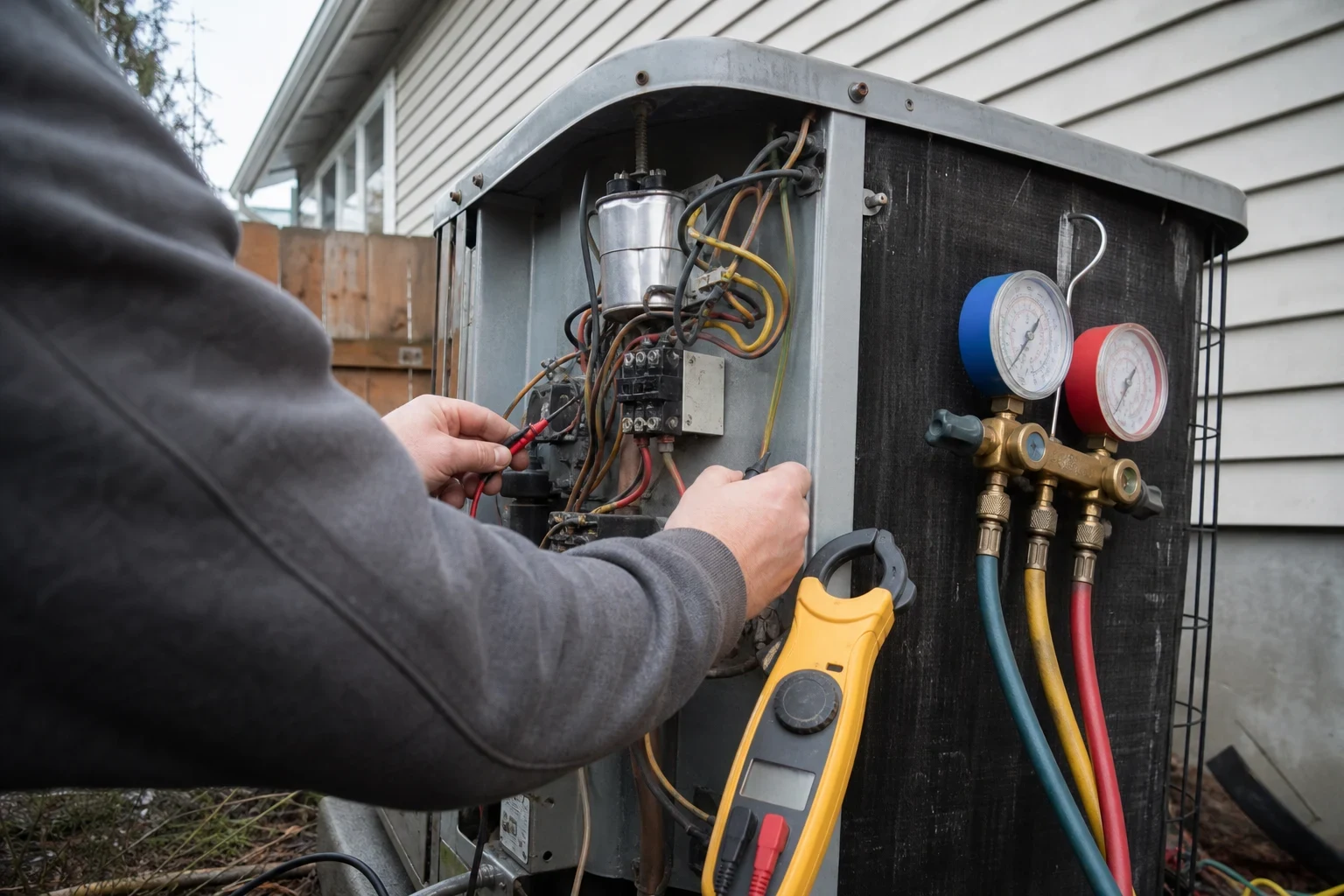
Most AC breakdowns come down to a handful of parts: a weak capacitor, a worn contactor, a failing fan motor, a refrigerant leak or a coil too dirty to move heat. We test each one instead of guessing, so you only pay to fix what is actually wrong.
Parts are not all built the same, and that matters for how long a repair lasts. An aluminum coil resists the pinhole corrosion that can eat through older copper coils, while copper is easier to braze and patch. A higher-rated capacitor costs a little more and handles summer heat better. We lay out those trade-offs so you can decide with real information.
HVAC Latah is licensed and bonded in Washington, and we work on air conditioners of all major brands across Latah, Cheney, Spokane and the surrounding area.
What an AC repair visit covers
Full electrical check
We test the capacitor, contactor, wiring and breaker. Capacitors are the most common failure we see, and a swollen or weak one can take the compressor down with it if it is ignored.
Refrigerant and leak testing
We read system pressures and check for leaks at coils, line sets and fittings. If your system runs on older R-22 refrigerant, we explain the cost of recharging it versus other options, since that refrigerant is no longer produced.
Coil inspection and cleaning
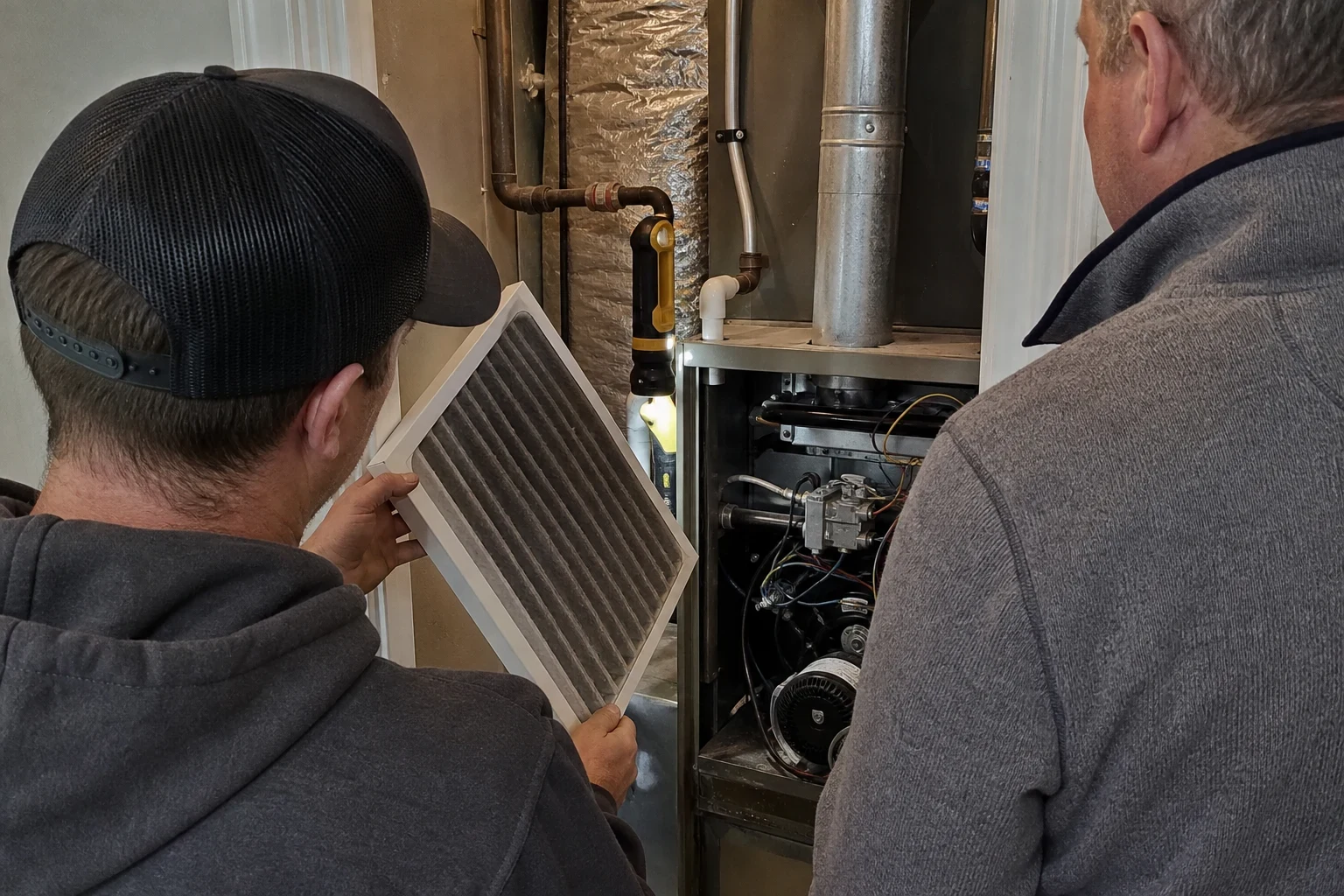
We look at both the outdoor condenser coil and the indoor evaporator coil. Dust, cottonwood fluff and grass clippings pack into condenser fins fast, and a clogged coil makes the compressor work far harder than it should.
Fan motors and blower
We check amperage draw, bearings and blades on the outdoor fan and the indoor blower. A motor pulling too many amps is close to failing, and catching it early is cheaper than a mid-July breakdown.
Thermostat and controls
Sometimes the air conditioner is fine and the thermostat or a control board is the problem. We rule that out before recommending any bigger repair.
Factory-backed knowledge
Our technicians are Trane Certified, so we know the parts and specifications those systems call for, and we bring the same care to every other brand we service.
Signs your air conditioner needs repair
- Lukewarm air at the registers
- Air is moving through the house, yet it never feels cold. Common culprits are a refrigerant leak, a coil caked with grime or a condenser outside that quit while the indoor blower kept going.
- A hum and nothing else
- If the outdoor unit buzzes but its fan sits still, a dead capacitor or a stuck motor is the likely cause. Switch the system off at the thermostat so the compressor isn't left straining.
- Frost on the copper line
- Ice forming on the refrigerant line or the indoor coil tells us airflow or refrigerant charge is wrong. Shut the cooling off, let everything thaw and wait for a check before running it again.
- Starts and stops every few minutes
- Rapid on-off cycling wears out contactors and compressors early, and the house stays clammy because the system never runs long enough to pull moisture out.
- Puddles near the furnace or air handler
- A blocked condensate line or a cracked drain pan can quietly damage flooring and drywall. Caught early, it is usually a quick fix.
- An electric bill that climbs
- When usage hasn't changed but the bill has, the system is often fighting a worn part or a coil that can't shed heat.
How your repair visit goes
- 1
Tell us what you're noticing
Give us a quick rundown of the symptoms and we set a time to come out. Late at night or on a weekend, someone still picks up, and you won't see an after-hours or emergency charge on the bill.
- 2
We find the cause
Our technician tests the electrical parts, refrigerant pressures, coils and airflow, then points out exactly what failed. Should you choose to move forward, what you paid for the diagnosis comes off the repair total.
- 3
The price, in writing, before we touch anything
Nothing gets started until you have a written quote in hand. When there is a real choice, like a standard or heavy-duty capacitor, or patching a coil versus replacing it, we explain how each option holds up.
- 4
We repair it and prove it works
We make the repair, run the system through a full cycle, check temperatures at the vents and clean up before we leave.
What affects the cost of AC repair
The price depends mostly on which part failed and what it is made of. A capacitor swap is a small job, while a compressor or coil is a major one. Your written quote lists everything before we start, so there are no surprises.
- The part that failed
- Electrical parts like capacitors and contactors cost far less than motors, coils or compressors.
- Refrigerant type
- Systems using R-22 are expensive to recharge because supply is limited. Newer R-410A and R-454B systems cost less to service.
- Coil material and age
- Copper coils with pinhole leaks can sometimes be repaired, but widespread corrosion may make replacement the better value. Aluminum coils are lighter and resist that corrosion but are harder to patch.
- Access to the equipment
- An indoor unit in a tight crawlspace or attic takes longer to reach and work on than one in an open basement or garage.
- Age of the system
- On an older unit, we will tell you honestly if a repair is worth it or if AC installation would serve you better.
AC repair questions
- Should I repair my air conditioner or replace it?
- It depends on the age of the unit, the part that failed and the refrigerant it uses. A newer system with a bad capacitor is almost always worth repairing. An older R-22 system with a failed compressor usually is not. We will give you a straight answer and the numbers to compare.
- Do you answer AC calls at night or on weekends?
- Yes. Our 24/7 emergency HVAC repair means a technician is reachable any hour, and a midnight or Sunday visit is billed the same as a weekday one because we don't add after-hours or emergency charges. In a heat wave, a dead air conditioner can be a real health risk for older family members, young kids and pets, so we treat those calls seriously.
- What is the difference between a copper and aluminum coil?
- Copper transfers heat well and is easy to repair with brazing, but it can develop small pinhole leaks over time. Aluminum resists that kind of corrosion and is common in newer systems, though it is harder to repair if it is damaged. We will tell you which one your system has and what that means for your repair.
- Do I lose the diagnostic fee if I approve the repair?
- Not at all. That fee is applied to your repair bill when you decide to go ahead. Either way, you see the full written price before we begin, so you can weigh it without pressure.
- How can I keep my AC from breaking down again?
- Keep the outdoor unit clear of grass, leaves and debris, and change your filter regularly. A yearly tune-up catches weak parts before they fail. Ask us about our maintenance plans when we visit.
Let's get your home cool again
Tell us what your air conditioner is doing and we will find the cause, explain your options and give you a written quote first. Day or night, we answer.