ServicesFurnace Repair
Furnace Repair in Latah, WA
When your furnace short cycles, blows cold air or won't light, we find the cause and walk you through the part options in plain words. You get a written quote before any work begins, and no surprise charges once we're done.
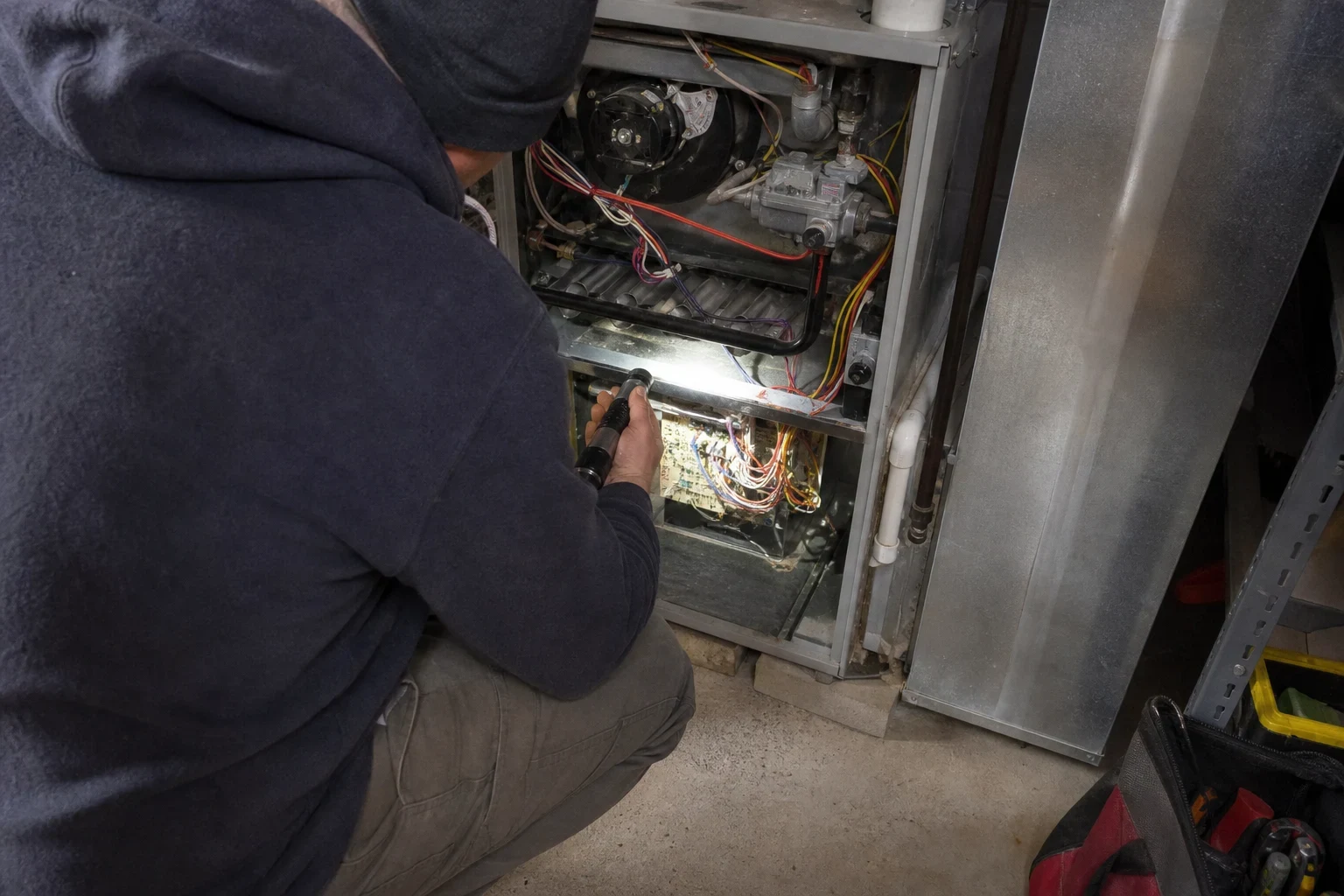
Getting Your Heat Back, Without the Guesswork
Most furnace breakdowns come down to one part: an igniter that cracked, a flame sensor coated in residue, a pressure switch that stuck or a blower motor that wore out. Our job is to find that part, test it and tell you honestly whether a repair makes sense or whether the furnace is near the end of its life.
Parts are not all built the same, and that affects how long a repair lasts. We explain the difference between the original manufacturer part and a universal replacement, what each costs you over time, and which suits a furnace of your age. HVAC Latah is licensed and bonded in Washington, so you know who is working in your home.
If the heat quits on a cold night, pick up the phone anyway. We take repair calls at any hour, and a late visit is billed the same as a daytime one.
What a Furnace Repair Visit Includes
- Full diagnostic, not a quick guess
- We check the thermostat, igniter, flame sensor, gas valve, pressure switch, limit switch and blower before naming a problem. The diagnostic fee is credited toward the repair.
- Igniter options explained
- Older silicon carbide igniters are brittle and can crack from a fingerprint or a hard cycle. Silicon nitride igniters cost a bit more but handle repeated heating far better. We tell you which fits your furnace and why.
- Blower motor repair or replacement
- Older PSC motors run at one speed and draw more power. Many furnaces can take a variable-speed ECM motor instead, which runs quieter and steadier. We lay out both choices so you can weigh cost against comfort.
- Heat exchanger inspection
- The heat exchanger is the steel that keeps combustion gases out of your air. We look for cracks, rust and heat stress, and we check carbon monoxide levels so you know the furnace is safe to run.
- Work on Trane systems
- We are Trane Certified, so if you have a Trane furnace we know its controls and parts well. We repair other common brands too.
- Cleanup and a final test
- We run the furnace through full heating cycles, confirm safe operation and clean up the work area before we leave.
Signs Your Furnace Needs Repair
It clicks but never lights
Repeated clicking with no flame often points to a failing igniter or a dirty flame sensor. Both are common, fairly simple repairs.
Cold air from the vents
If the blower runs but the air stays cool, the burners may be shutting off early. A tripped limit switch or a clogged filter can cause this.
Short cycling
A furnace that starts and stops every few minutes wears its parts quickly and wastes fuel. We find out whether it's airflow, a sensor or the thermostat.
New noises
Squealing usually means a worn blower bearing or belt. Banging at startup can mean delayed ignition, which deserves a look soon.
Rising gas bills
A bill that jumps through a stretch of similar temperatures suggests your furnace is working harder to hold the same setting. Worn components and restricted airflow are the usual culprits.
A yellow, flickering flame
A healthy burner flame is mostly blue. Yellow or lazy flames can signal incomplete combustion, so shut the furnace off and give us a call.
How a Furnace Repair Visit Works
- 1
You call and tell us what's happening
Describe the sounds, the error lights or what the thermostat shows. That helps us bring the right parts.
- 2
We diagnose and show you what we found
Our technician tests the system, points out the failed part and explains what caused it. If you want to see it, we'll show you.
- 3
You choose from clear part options
We give you a written quote before any work begins, with the part choices and their trade-offs spelled out. Nothing happens until you agree.
- 4
We repair, test and clean up
We install the part, run the furnace through several cycles, check safety controls and leave the area tidy.
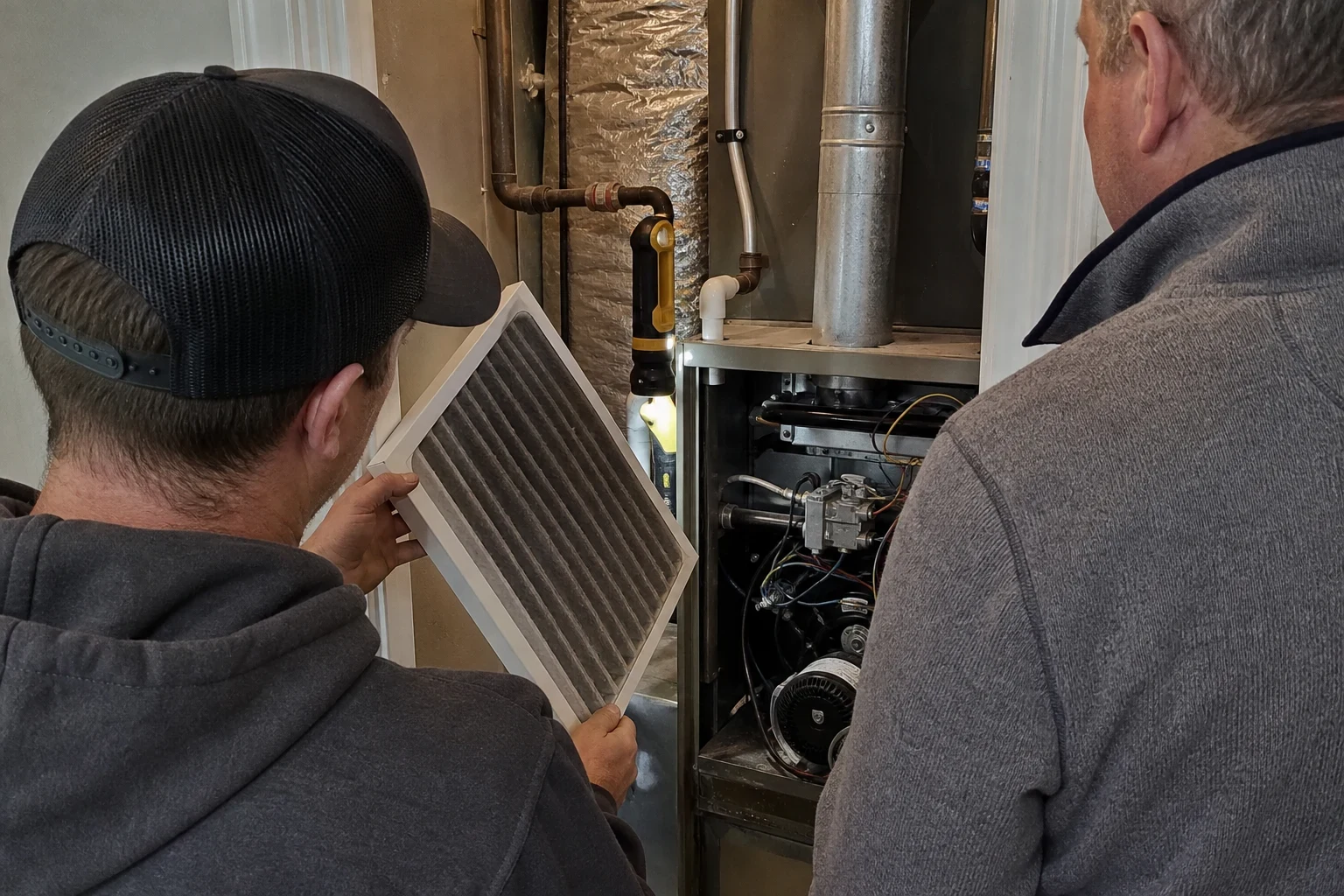
What Affects the Cost of Furnace Repair
The price depends mostly on which part failed and what that part is made of. A flame sensor cleaning and a blower motor replacement are very different jobs. You'll see every line in writing before we start.
- The part that failed
- Sensors and igniters are smaller repairs. Control boards, gas valves, inducer motors and blower motors cost more.
- Original or universal parts
- Manufacturer parts match exactly and often last longer. Universal parts can cost less and work well in many cases. We explain which makes sense for your unit.
- Age and condition of the furnace
- Older furnaces can have discontinued parts or several worn components at once. If repairs are stacking up, we'll tell you honestly and can talk through furnace installation instead.
- Access to the unit
- A furnace in a tight crawlspace or attic takes longer to service than one in an open basement.
Furnace Repair Questions
Something not covered here? (509) 213-1614
Is it worth repairing an older furnace?
Often yes, if the heat exchanger is sound and the repair is a single part. If the furnace has had several failures in recent years or shows heat exchanger damage, replacement usually makes more sense. We'll give you our honest read and the numbers for both.
What happens to the diagnostic fee once I approve the work?
It comes off your repair bill. We credit the diagnostic fee toward the repair, so saying yes means that charge becomes part of your total instead of an extra line on top of it.
What if my furnace stops working in the middle of the night?
Call us anyway. Our emergency HVAC repair line is answered at every hour of every day, and a visit at 2 a.m. costs you nothing extra compared with one at noon. If you smell gas, get everyone outside first and phone the gas utility, then reach out to us.
Should I upgrade to a variable-speed blower motor during a repair?
It depends on your furnace model and how long you plan to keep it. An ECM motor runs quieter, uses less electricity and keeps temperatures more even, but it costs more up front. On a newer furnace it's often a good investment; on an aging one, we may suggest keeping it simple.
Can regular maintenance prevent these breakdowns?
Many of them, yes. Cleaning the flame sensor, checking the igniter and testing safety controls each fall catches wear before it leaves you without heat. Our maintenance plans include tune-ups, repair discounts and priority scheduling.
Let's Get Your Furnace Running Again
Tell us what your furnace is doing and we'll walk you through the likely causes and your options. We serve Latah, Cheney, Spokane and nearby towns, day or night.